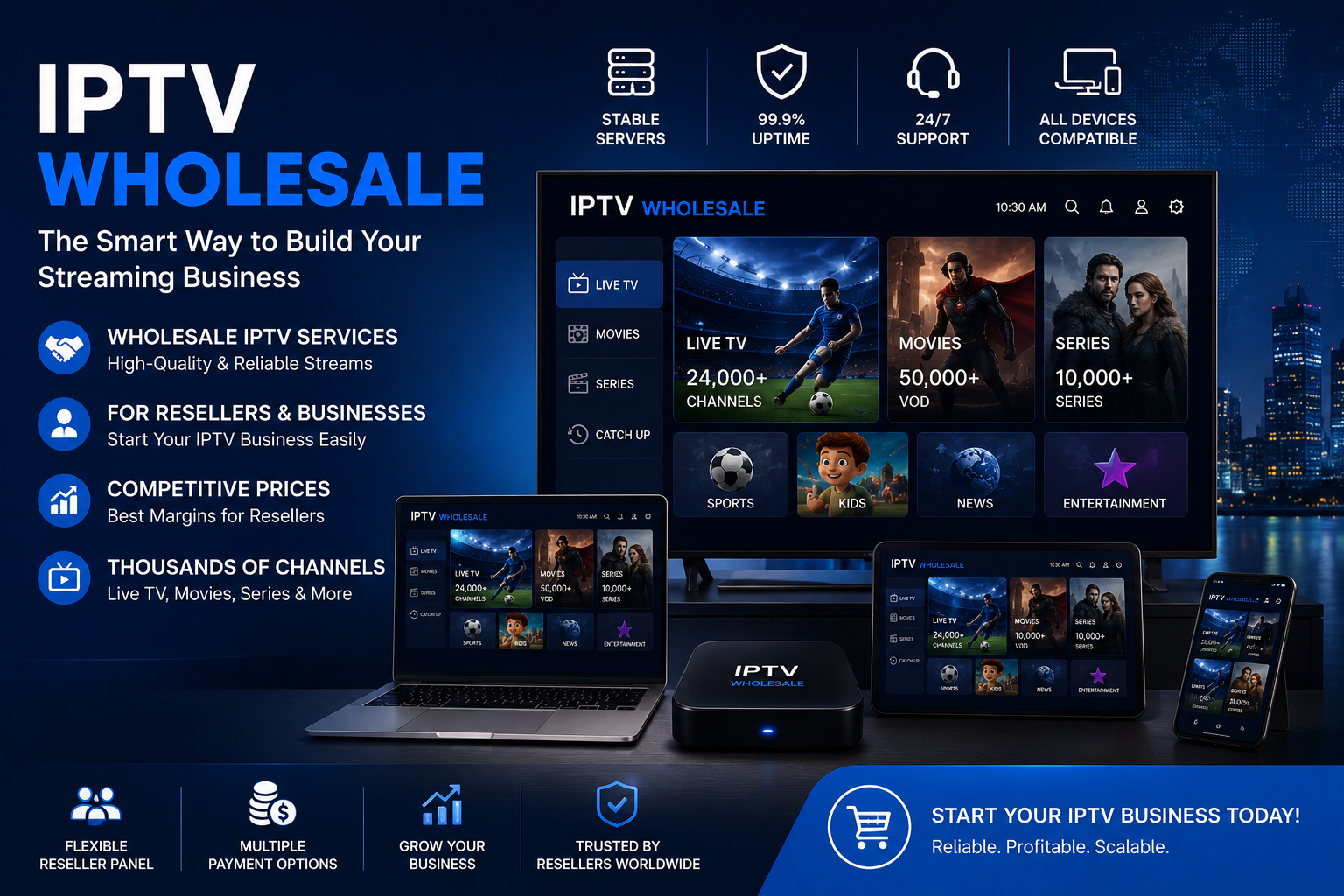
IPTV Wholesale Guide for Resellers
IPTV wholesale is the business model behind many retail streaming offers. It gives a company access to content delivery tools, channel lineups, and platform features that can be shaped into offers for end users. For agencies, telecom firms, entrepreneurs, and IPTV resellers, it can be a practical way to enter or grow in the streaming market without building every layer on its own.
What is IPTV wholesale, and who is it for?
IPTV wholesale is a business deal where a supplier gives bulk access to IPTV services, platform space, or subscription stock that another business can resell. Instead of creating servers, apps, billing systems, content workflows, and support processes on its own, a reseller works with wholesale IPTV providers to deliver a ready-to-market streaming service.
This model is often used by digital entrepreneurs, local service businesses, web agencies, telecom operators, and media startups. It can also suit established IPTV resellers that already have an audience but need more stable backend support, wider IPTV packages, or better account tools.
At its best, wholesale IPTV is not just about buying low and selling high. It is about choosing dependable IPTV solutions, shaping them into clear offers, supporting customers well, and working in a way that respects content rights, local rules, and platform expectations.

The basic structure of IPTV wholesale
Most IPTV wholesale relationships have three main parts: the supplier, the reseller, and the end user. The supplier manages the delivery platform and may provide access to channels, video-on-demand libraries, device support, control panels, or subscription credits. The reseller then markets, sells, and supports the service for their own customers.
The exact setup depends on the supplier. Some IPTV suppliers use a simple credit system where resellers buy subscription credits in bulk and activate accounts as needed. Others offer white-label branding, custom apps, reseller panels, tiered IPTV packages, or API links for businesses that want more control.
A professional wholesale setup usually includes:
- A management panel for creating, renewing, suspending, and tracking user accounts.
- Package controls so resellers can offer different subscription lengths or content bundles.
- Device support across smart TVs, Android devices, streaming boxes, mobile devices, and web players where supported.
- Technical documentation to help resellers configure apps, answer customer questions, and cut support delays.
- Support channels for service issues, activation problems, uptime concerns, and platform updates.
The reseller’s job is to turn these backend tools into a customer-friendly offer. That means clear pricing, simple instructions, realistic expectations, and responsive support.
Wholesale IPTV is a service model, not just a product
One common mistake is to treat IPTV wholesale as a one-time purchase. In reality, it is an ongoing service relationship. Streaming quality, server performance, customer support, package availability, payment flow, and app support all affect the customer experience over time.
This is why checking IPTV providers takes more than counting channels or features. A long channel list is not useful if streams buffer often, support is slow, or account renewals are confusing. Strong IPTV services depend on steady flow, good order, and clear communication.
For resellers, this service view matters because customers usually judge the retail brand, not the wholesale supplier behind it. If something breaks, the customer contacts the reseller. If setup steps are unclear, the reseller has to explain them. If a package does not fit the customer’s device or viewing habits, the reseller handles the frustration.
A reliable wholesale partner should make it easier for resellers to serve customers, not harder.
How do IPTV resellers make wholesale packages profitable?
IPTV resellers make wholesale packages profitable by buying access or credits in bulk, shaping them into retail offers, and adding value through branding, support, guidance, and customer care. Profit does not come only from the margin between wholesale and retail price. It also comes from lower churn, easier setup, stable IPTV packages, and stronger trust.
A reseller who simply lists a subscription and waits for sales may struggle. A reseller who explains plan differences, helps customers choose compatible devices, gives onboarding steps, and renews accounts smoothly has a better chance of repeat business.
Practical ways resellers can improve profit include:
-
Start with a focused offer
Too many plans can confuse buyers. Begin with a small set of IPTV packages that are easy to compare, such as monthly, quarterly, and annual options or basic and premium tiers. -
Match packages to real customer needs
Some customers care about sports, some want international channels, and others mainly want video-on-demand. Package names and descriptions should make those differences clear without hype. -
Create simple setup guides
Clear instructions cut support time. A short guide for each common device can prevent repeat questions and improve the first customer experience. -
Track renewals carefully
Subscription businesses depend on a steady flow. Reminders, renewal steps, and customer records help avoid missed renewals and service breaks. -
Invest in customer support habits
Fast, polite, practical replies can set a reseller apart even when several rivals offer similar IPTV services.
Profit improves when the reseller treats the business like a managed service rather than a quick sale.
Choosing the right IPTV suppliers
The quality of your supplier shapes the quality of your retail service. Before you commit to any wholesale deal, evaluate IPTV suppliers with a mix of technical, day-to-day, and business checks.
Start with reliability. Ask how the platform handles busy periods, what support channels are available, and how service issues are shared. You do not need perfect guarantees, but you do need a supplier that takes performance seriously and responds when problems appear.
Next, review the reseller tools. A useful panel should be easy to use, especially if you plan to manage many customers. Account creation, renewals, trials, package changes, and status checks should be simple enough for your team to handle without constant supplier help.
It is also important to understand brand options. Some businesses are happy to resell under an existing platform identity, while others want white-label IPTV solutions that let them present a more custom brand experience. If you want to design IPTV offers around your own audience, brand flexibility can make the service feel more polished and consistent.
A supplier review checklist should include:
- Clear details about available IPTV packages and what each one includes.
- A stable reseller dashboard or account management panel.
- Responsive technical support for resellers.
- Transparent renewal, credit, and activation steps.
- Device and app support details.
- Documentation for setup and troubleshooting.
- Responsible handling of content rights and compliance rules.
- Room to scale as your customer base grows.
Avoid choosing a supplier based only on the lowest cost. A cheap wholesale plan can become expensive if it creates refunds, complaints, downtime, or constant support problems.
Designing IPTV packages customers can understand
Good package design is about clarity. Customers should know what they are buying, how long it lasts, what devices are supported, what type of content is included, and what help they can expect after purchase. When package details are vague, customers may guess at features that are not actually included.
If you want to design IPTV offers well, think like the customer. A first-time buyer may not understand technical terms, playlist formats, player apps, or device limits. They want to know whether the service works on their device, whether setup is hard, and whether the package includes the content they care about.
A simple package structure might include:
- Starter plan for customers who want a short-term option before they commit.
- Standard plan for regular viewers who want a balanced subscription length.
- Premium plan for customers who want longer access, broader support, or more complete content categories.
- Specialty plan for audiences interested in specific regions, languages, sports, or entertainment types when available.
Descriptions should be specific enough to guide the purchase but careful enough not to promise things the service cannot deliver. For example, instead of saying a service works everywhere, say which device categories are supported and ask customers to confirm fit before they buy.
What risks should businesses consider before reselling IPTV services?
Businesses should consider legal, technical, financial, and brand risks before reselling IPTV services. The most important question is whether the content is properly licensed and whether the reseller model follows the laws, platform rules, and payment rules in the markets served.
Not all IPTV offerings work the same way. Some are managed streaming services, while others may involve unauthorized distribution. Resellers should avoid assuming that a wholesale supplier is compliant just because the service is available or popular. Ask direct questions, review terms, and seek legal advice when needed.
Technical risk also matters. Buffering, outages, unsupported devices, expired apps, and unclear setup steps can quickly lead to unhappy customers. Financial risk appears when a reseller buys too much stock up front, chooses unstable suppliers, or depends on one sales channel without a retention plan.
To reduce risk:
- Work only with suppliers that give clear business terms.
- Keep customer claims accurate and conservative.
- Avoid using copyrighted logos, channel names, or brand assets without permission.
- Keep refund, support, and renewal policies in writing.
- Test services and devices before promoting them widely.
- Keep records of customer accounts, payments, and support requests.
Responsible reselling protects both the customer and the business.
Marketing IPTV solutions with trust
Marketing IPTV solutions works best when the message is practical and customer-focused. Instead of hype, explain the viewing experience, supported devices, setup steps, package choices, and support options. People are more likely to buy when they understand what happens after payment.
Useful content can help here. Blog posts, short setup videos, device guides, comparison pages, and onboarding emails can reduce friction before and after the sale. A customer who can quickly find instructions is less likely to give up on setup or ask for basic help.
Trust also comes from consistency. Use the same package names across your website, checkout flow, support messages, and renewal reminders. If your offer changes, update customer-facing information quickly so expectations stay aligned with the real service.
Building a sustainable IPTV wholesale business
A sustainable IPTV wholesale business is built on supplier quality, clear communication, reliable systems, and careful marketing. The opportunity can be attractive, but long-term success depends on more than access to subscriptions. It requires a service mindset.
Start small, test carefully, document your setup process, and choose IPTV providers that support your goals rather than simply offering the biggest list of features. Build IPTV packages around real customer needs, keep your claims accurate, and make support easy to reach.
The businesses that do best in wholesale IPTV are usually the ones that combine practical technology with clear communication. When customers know what to expect and resellers have dependable systems behind them, IPTV can become a more organized, professional, and scalable service offering.
Q&A
Question: What is the main difference between an IPTV wholesale supplier and an IPTV reseller?
Short answer: The supplier gives the backend service, such as platform space, subscription credits, content access, reseller panels, app support, and technical help. The reseller turns those tools into a customer offer by setting packages, handling sales, guiding setup, managing renewals, and supporting end users.
Question: Why should resellers avoid choosing IPTV suppliers based only on price?
Short answer: The lowest-cost supplier may create bigger business problems if the service is unstable, support is slow, renewals are confusing, or device support is weak. A cheap wholesale plan can lead to refunds, complaints, downtime, and extra support work, which can cut profit and hurt trust.
Question: What should a reseller include in clear IPTV packages?
Short answer: A clear package should explain the subscription length, supported device types, content focus, setup steps, and available support. The goal is to help customers understand what they are buying without hype or false promises.
Question: How can IPTV resellers reduce customer churn?
Short answer: Resellers can reduce churn by choosing stable IPTV services, offering simple setup guides, matching customers with suitable packages, answering support requests quickly, and tracking renewals carefully. Customers are more likely to stay when the service is easy to use and account management feels reliable.
Question: What compliance issues should businesses consider before reselling IPTV services?
Short answer: Businesses should confirm that the content is properly licensed and that the reseller model follows the laws, platform rules, and payment rules in the markets they serve. They should also avoid unauthorized use of copyrighted logos, channel names, or brand assets and seek legal advice when needed.