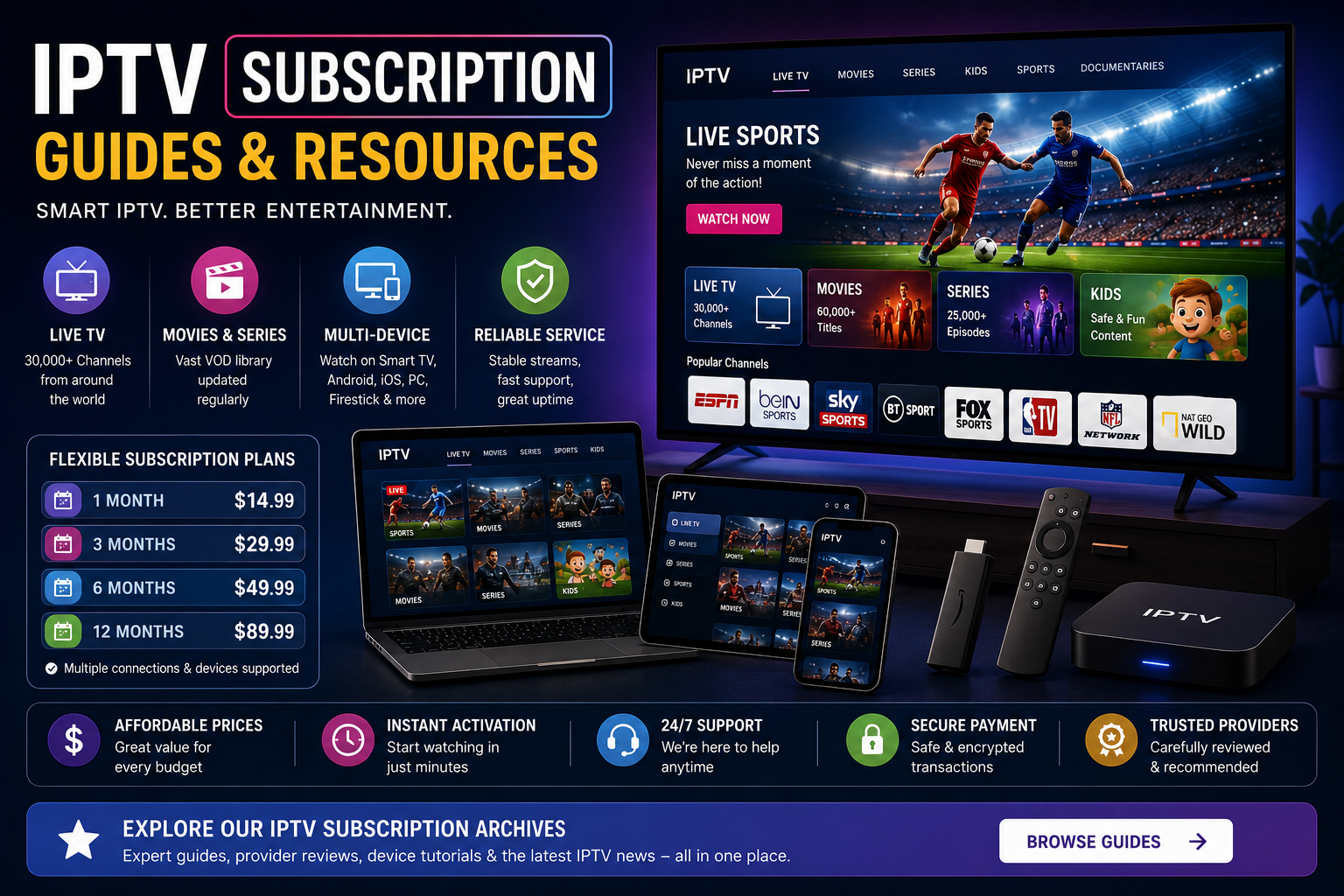
IPTV Subscription Archives – Digitalweb Buyer Guide
IPTV subscriptions offer a flexible way to watch TV-style content over the internet instead of through aerial, satellite, or cable. This guide explains what an IPTV subscription is, how it works, what to check before you pay, and how to compare IPTV deals with a clear eye. It is for anyone exploring iptv with subscription options, from casual streamers to homes that want a more flexible viewing setup.
What is an IPTV subscription?
An IPTV subscription is a paid plan that lets you stream live channels, on-demand programmes, films, or other video through internet protocol technology. In plain terms, your device asks for the content through your broadband line and plays it in an app, smart TV, streaming box, phone, tablet, or computer.
The experience feels familiar. You choose a channel, browse a guide, or open a library of content. The main difference is the way the video reaches you. Because IPTV depends on your internet connection, service quality is shaped by speed, stability, device fit, server performance, and the provider’s content rights.
That last point matters. A reliable iptv subscription should be clear about what it offers, how access works, and whether the content is properly licensed. If a service looks oddly vague, promises thousands of premium channels for very little money, or gives no business details, it is wise to slow down before you pay.
How IPTV works in everyday use
IPTV sends video data over the internet in small packets. Your device then turns those packets into smooth playback. When you click a live channel or on-demand title, the app connects to the provider’s system, checks your access, and starts the stream.
For most users, the process is simple. You choose a plan, get login details or setup steps, install a compatible app, and start watching. Some services use their own branded apps, while others work with common IPTV players. A smart iptv subscription can be a good fit if you want to watch on a smart TV without extra hardware.
The viewing quality depends on a few practical points:
- Broadband stability: A fast line helps, but a stable line matters more when you want to avoid buffering.
- Device performance: Older TVs, boxes, or phones may struggle with high-resolution streams or heavy apps.
- App support: Not every IPTV service runs well on every device, so check before you subscribe.
- Home network setup: Wi-Fi dead zones, busy routers, or too many streams can hurt playback.
- Provider reliability: Even with good internet, a weak provider can still give uneven service.
The main types of IPTV content
IPTV subscriptions vary a lot. Some focus on live TV, others on catch-up viewing, and some mix several content types in one plan. Knowing the difference helps you choose a service that matches your habits instead of paying for features you never use.
Live TV streaming
Live IPTV is meant to copy the normal channel experience. You open an app, pick a channel, and watch what is being shown right now. This can suit sports fans, news viewers, and anyone who likes a set schedule.
If live TV is your priority, look for a clear channel list, an electronic programme guide, and steady stream quality at busy times. A provider may advertise attractive iptv deals, but the real value depends on whether the channels you want are there and stay stable.
Video on demand
Video on demand lets you pick from a library of programmes, films, or series and watch them when you want. This is closer to the streaming apps many people already know. The main benefit is freedom: you are not tied to a broadcast schedule.
Before you pay, check how the library is organised and updated. A service that only lists many titles is not always better than one with a smaller but better kept catalogue.
Catch-up and time-shifted TV
Catch-up features let you watch content after it has aired. Time-shifted TV may let you pause, rewind, or replay live content within set limits. These tools can help busy homes, especially when people watch at different times.
Not every IPTV subscription includes catch-up, and what you get can change by channel or region. If this matters to you, confirm the details before you commit.
What should you look for before subscribing?
Before choosing an IPTV subscription, look for clear facts, device fit, support, content quality, and fair terms. A good provider should make it easy to see what you are buying, how to use it, what devices work, and what happens if something goes wrong.
Start with the basics.
Does the provider explain the subscription length?
Are renewal terms clear?
Can you test the service, view a demo, or ask questions before paying?
Is there guidance for installation?
These small points show a lot about how organised and user-focused the service is.
A practical pre-purchase checklist includes:
- Content fit: Make sure the channels, languages, genres, or on-demand groups match your needs.
- Device support: Confirm whether it works on smart TVs, Android devices, iOS, streaming boxes, or web browsers.
- Streaming quality: Look for realistic quality claims and do not assume every stream will always reach the highest resolution.
- Customer support: Check whether help is available through email, chat, tickets, or clear setup guides.
- Payment safety: Use secure payment methods and be careful with providers that ask for unusual transfers.
- Legal clarity: Prefer services that speak openly about rights, availability, and allowed use.
- Cancellation terms: Know whether the subscription renews on its own and how to stop it.
If you compare resources such as IPTV Subscription Archives – Digitalweb or other content hubs, use them as a starting point for learning, not as a replacement for checking the provider itself. Archives and guides can help you understand terms, but your choice should still rest on the current offer, terms, and support quality.
Cheap does not always mean good value
A cheap iptv subscription can be tempting, especially when the package looks large. However, the lowest price is not always the best deal. Poor stream stability, missing support, unclear terms, or poor access can quickly turn a low-cost plan into a frustrating purchase.
That does not mean low price is bad. Sensible iptv deals can be worth it when the provider is clear and the plan matches your needs. The key is to judge value, not just price.
When you review cheaper IPTV subscriptions, ask yourself:
- Does the offer explain exactly what is included?
- Are there clear limits on devices, simultaneous streams, or regions?
- Is support available if setup fails?
- Are the payment and renewal terms easy to understand?
- Does the service make unrealistic claims?
- Can you start with a shorter plan before you commit long term?
A good rule is to avoid paying for a long subscription until you are sure the service works well on your own internet connection and devices. Even a well-reviewed service can perform differently at home.
Smart IPTV and device fit
A smart iptv subscription is often chosen by people who want a neat, living-room-friendly setup. Instead of connecting extra boxes or cables, you may be able to install an IPTV app on your smart TV and log in directly. This can be convenient, but support is not always guaranteed.
Different TV brands and operating systems support different apps. Some apps need activation, playlist links, portal details, or account details. Others may not be in every app store. Before you buy, check whether the provider gives step-by-step instructions for your exact device.
If you are not using a smart TV, common choices include:
- Streaming boxes or sticks
- Android TV devices
- Smartphones and tablets
- Laptops or desktop browsers
- Media player apps that support IPTV playlists
For the smoothest experience, keep your app updated, restart your router from time to time, and avoid too many high-bandwidth tasks at once. If buffering happens, test with a wired connection or move your device closer to the router before you blame the IPTV service.
Understanding regional terms and audience needs
IPTV is searched for in different ways across different markets. In English, people often look for an iptv subscription or compare iptv subscriptions. In French-speaking settings, the phrase abonnement iptv is often used for the same broad idea: a subscription-based IPTV service.
This matters because providers, channel sets, support languages, and viewing expectations can vary by audience. A home looking for international channels may care more about language choice and regional content. Another viewer may prefer sport, films, children’s programming, or catch-up features.
Rather than choosing the most heavily promoted plan, define your own viewing profile first. List what you watch each week, what you only watch sometimes, and what you would not miss. This helps you ignore inflated package sizes and focus on real value.
Common mistakes to avoid
Many IPTV problems start before the first stream plays. The buyer rushes into a plan, assumes every device works, or ignores warning signs because the price looks good. Taking a few minutes to check the basics can save time and stress later.
Avoid these common mistakes:
- Buying the longest plan first: Start small if you have not tested the service.
- Ignoring device requirements: A subscription only helps if it works on your chosen screen.
- Overlooking broadband limits: Weak Wi-Fi can make a good service look bad.
- Choosing only by channel count: More channels do not always mean better viewing.
- Skipping the terms: Renewal, refund, and cancellation details matter.
- Trusting vague promises: Clear information is a sign of a more professional service.
It is also wise to keep your expectations realistic. IPTV can be flexible and easy to use, but it still depends on technology, licensing, networks, and devices working together.
A practical way to compare IPTV options
The best way to compare IPTV options is to build a short list and judge each provider by the same rules. This keeps the choice objective and stops one flashy claim from taking over the decision.
Use this simple process:
- Define your must-haves: Channels, languages, devices, catch-up, or on-demand content.
- Check support: Confirm that your main TV, phone, or box is supported.
- Review the terms: Look at subscription length, renewals, refunds, and support routes.
- Check trust signals: Clear contact details, setup guides, and plain descriptions help.
- Start small: Choose a shorter plan where possible before you upgrade.
- Test at busy times: Evening and weekend performance can reveal more than a quiet weekday test.
This method works whether you are comparing one iptv with subscription plan or several competing offers. It keeps the focus on your real viewing experience, not just marketing language.
Final takeaway
IPTV subscriptions can be a useful way to access live TV, on-demand content, and flexible viewing across different devices. The best choice is not always the biggest package or the lowest price, but the service that is clear, compatible, stable, and suited to how you actually watch.
If you are exploring iptv deals, smart TV options, or an abonnement iptv for multilingual viewing, take your time and compare carefully. A little prep before you subscribe can be the difference between a smooth streaming experience and a disappointing one.
Q&A
Question: What is the most important thing to check before buying an IPTV subscription?
Short answer: Start by checking whether the service is clear about what it offers, which devices it supports, how the subscription renews, and whether help is available if something goes wrong. Content fit matters, but a large channel list is not enough if the provider gives vague details, has unclear payment terms, or does not work well on your chosen device.
Question: Is a cheap iptv subscription always a bad choice?
Short answer: Not necessarily. A cheaper plan can be good value if it is clear, stable, works with your devices, and suits what you actually watch. The warning sign is not low price alone, but unrealistic claims, weak support, unclear cancellation terms, or promises of huge premium packages with little information about licensing or reliability.
Question: Why can IPTV buffer even if the broadband speed seems fast?
Short answer: Buffering can happen because stability matters as much as speed. Weak Wi-Fi, router congestion, too many devices using bandwidth, an older streaming device, app support problems, or poor provider server performance can all affect playback. Testing with a wired connection, moving closer to the router, updating the app, and checking performance at busy times can help find the cause.
Question: What is the difference between live IPTV, video on demand, and catch-up TV?
Short answer: Live IPTV works like normal television, where you choose a channel and watch what is on now. Video on demand lets you pick films, series, or programmes from a library and watch them whenever you want. Catch-up TV lets you watch content after it has aired, while time-shifted tools may let you pause, rewind, or replay live content within certain limits.